Where the Wall Went: The Quiet Vanishing of America's Printed Memories
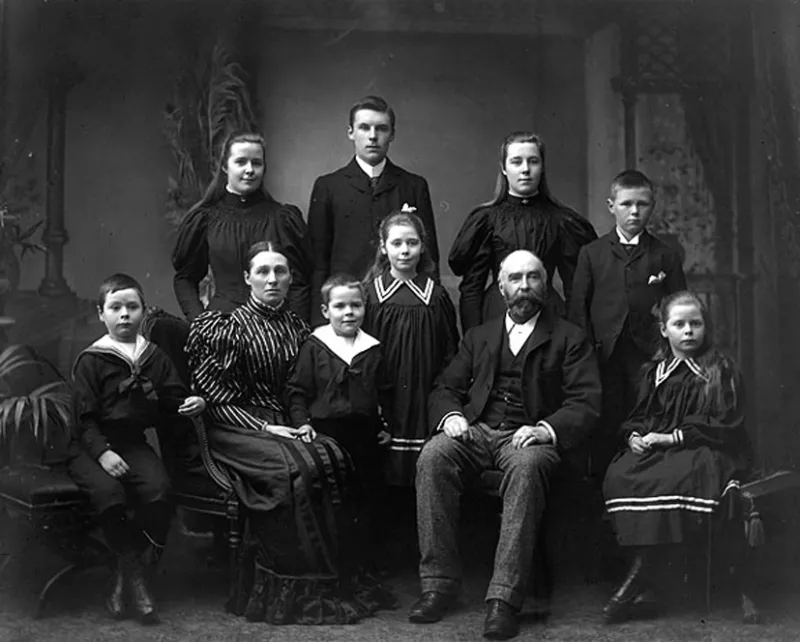
Photo: National Library of Ireland on The Commons, No restrictions, via Wikimedia Commons
There's a hallway in Wichita, Kansas, that tells the story of the Mitchell family better than any of them could. Fourteen frames, floor to ceiling on one side, starting with a faded 1978 wedding photo where the groom's boutonniere is bigger than his smile. The wall has survived three paint jobs, two remodels, and one very determined toddler with a sippy cup. Nobody in the family would call it art. They call it 'the wall.'
Walls like it are getting harder to find.
The Gallery That Moved to the Cloud
Ask around any suburban neighborhood and you'll hear the same thing: the photos exist, technically. There are tens of thousands of them, backed up in triplicate, sortable by face and location. What there isn't is a single one hanging where a visitor might stumble onto it.
The shift happened fast. A generation ago, developing film was an event — you picked up your envelope of prints at the drugstore, thumbed through them in the car, and chose which ones earned a frame. The friction was the point. Choosing meant something. Now the camera roll grows by the hundreds each month and the default is storage, not display.
Psychologists who study memory and objects have long argued that physical photographs do something digital files don't: they anchor a family's story in shared physical space. A kid who grows up walking past their own baby picture every day absorbs a narrative about who they are and where they came from. A kid whose baby pictures live behind a passcode absorbs, well, nothing.
The Print Shops Holding the Line
You can measure the decline at the counter of any independent photo lab. In the early 2000s, a busy shop might process hundreds of rolls a week. Today, the survivors have reinvented themselves — scanning services, restoration work, heirloom albums for weddings that cost more than the honeymoon.
The owners who've stayed open describe their customer base in two camps: older clients who never stopped printing, and younger clients who arrive with a strange, urgent request. They want everything from a dead grandparent's phone transferred and printed before the cloud account lapses or the device dies. They've learned the hard way that 'saved forever' often means 'saved until the subscription renews.'
There's a particular heartbreak these shops see regularly: the family hard drive that failed. The corrupted phone. The photos locked in an account nobody has the password to. Digital files feel immortal and behave like nothing of the sort.
What the Archivists Find in the Attic
Professional photo organizers and archivists — a small but growing profession — spend their days salvaging shoeboxes. They report that the printed albums people bring in from the 1950s through the 1990s are often in better shape than anyone expects. Glossy paper is stubborn. Kodacolor doesn't need a software update.
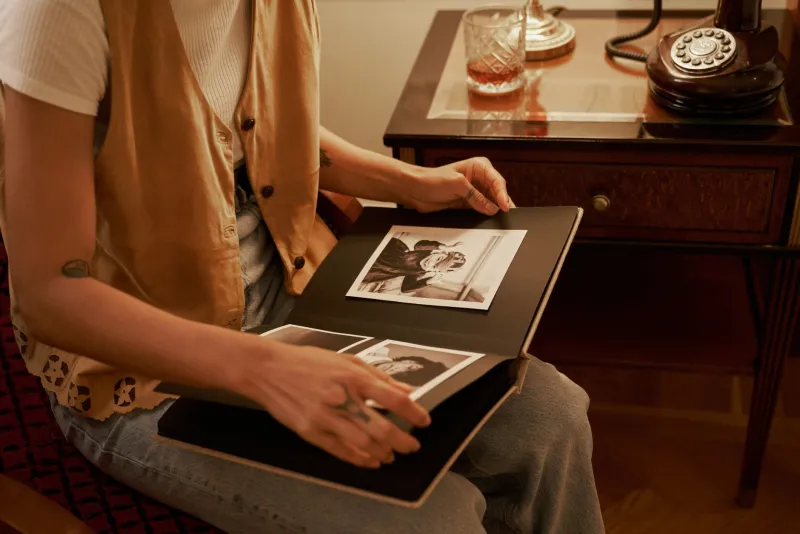
And inside those albums, archivists find things no camera roll surfaces: the marginalia. Grandmother's handwriting on the back of a print. The ticket stub tucked behind a beach photo. The sequence a mother chose to arrange, which tells you what mattered to her. A photo album isn't just images — it's an edited, annotated, hand-built object. The cloud has annotation-free, curation-free, infinitely abundant files. Abundance, it turns out, is a poor curator.
The Families Who Never Stopped Printing
The holdouts aren't nostalgic Luddites. Many of them are parents in their thirties who made a deliberate rule: one photo a month gets printed, no exceptions. It forces choosing. It forces looking. And it forces the photo into the house, where it takes up space in the good sense of the word.
One mother in Ohio described her system: a single gallery wall, one frame per child per year, updated every January. 'When the frames fill up,' she said, 'we'll know we did something right.'
Maybe that's what the disappearing wall is really about. A printed photo is a small public claim — this moment mattered enough to hold still. The cloud makes no claims. It just keeps everything, which is another way of keeping nothing.
The Mitchells' wall in Wichita has one empty frame at the bottom, at toddler height. It's been empty for six years. The matriarch says it's waiting for the right picture. Her daughter suspects it's waiting for the next generation to pick up the habit.
Either way, the frame stays on the wall.