Twelve Frames in a Burning House: What Your Rescue List Says About Your Legacy
Photo: Donald Trung Quoc Don (Chữ Hán: 徵國單) - Wikimedia Commons - © CC BY-SA 4.0 International.(Want to use this image?)Original publication 📤: --Donald Trung 『徵國單』 (No Fake News 💬) (WikiProject Numismatics 💴) (Articles 📚) 01:31, 10 November 2019 (UTC), C
Here is a question that starts as a party trick and ends as a full audit of your life: the house is on fire, everyone is already outside on the lawn, and you have ninety seconds. Which twelve photos do you run back in for?
Almost nobody answers fast. That hesitation is the whole point.
We have never owned this many pictures. A typical American camera roll in 2026 holds something north of 30,000 images, and that number jumps every time somebody's kid plays a Saturday soccer game. Yet when you run a fire drill through your own memory, the pile that survives is small, specific, and almost never sharp. It is rarely the sunset. It is almost always the ugly one.
Twelve Is a Cruel Number, and That Is Why It Works
Give someone a hundred, and they will hand you a hundred. Give them twelve and they have to mean it. Twelve forces a ranking, and a ranking forces honesty about what your family actually values versus what your family merely has.
Do it on paper, not on your phone. Screens invite scrolling; paper invites decisions. Write down the twelve. Then write one line next to each — who is in it, roughly when, and why it made the cut. If you cannot name the why in a sentence, it probably belongs in the pile of 29,988 that you love but would not burn for.
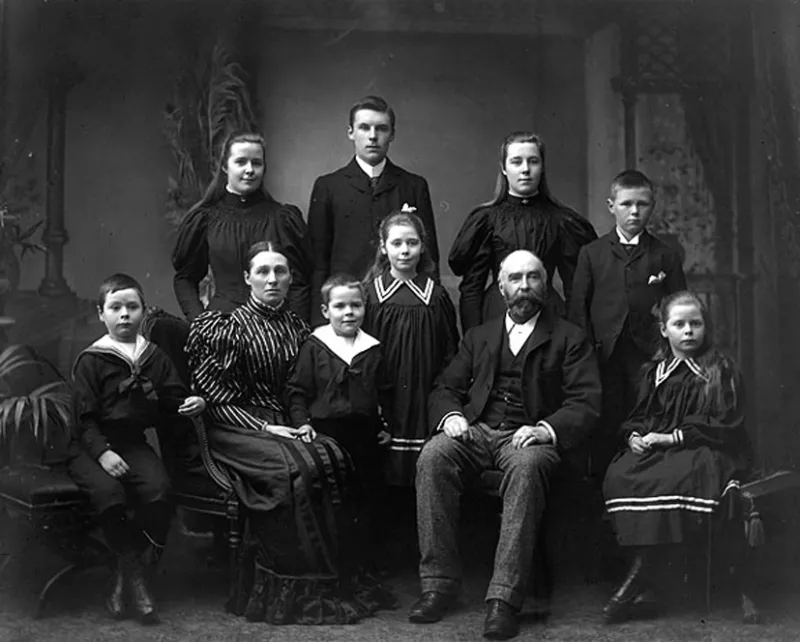
When our readers do this, the same categories show up again and again. A grandparent, usually young and not yet tired. A house that no longer exists. A wedding, but almost never a posed one. A baby in bad light. Somebody's hands. One photo where the person is laughing so hard they look nothing like their driver's license.
Notice what is missing from that list: technical quality. Nobody rescues a photo because the focus was perfect.
The Gap Between What You'd Save and What You Own
Once you have your twelve, open your camera roll and look for them. In most households, this is the uncomfortable part. Maybe four of the twelve are actually on the phone. Two are on an old laptop in a drawer. One exists only as a print taped inside a kitchen cabinet. Three you cannot find at all, and one you are fairly sure was on a device that got traded in during the pandemic.
That gap is your archive problem, and it is not a scanning problem. It is a keeping problem.
Most of us have been sold the same guilty story: that a good parent, a good son, a good citizen of their own family would digitize everything, label everything, and file everything into some perfect searchable library. Nobody does this. The people who start usually quit around folder three, then carry the guilt quietly for a decade.
There is a lighter way.
One Cloud Backup, One Box, One Twenty-Minute Review
The cloud backup. Pick a single destination and stop negotiating with yourself. One folder, named plainly — Family Keepers, or The Twelve, or whatever your family will recognize in fifteen years. Put your rescue list there, plus anything else you would genuinely grieve. Do not organize it by year, by child, or by event. That is how archives die. One folder, every rescue photo, full resolution, backed up to one place that is not a phone.
Print quality matters here. Upload the biggest file you have, not the version that got squished through a group text.
The labeled print box. This is the part people skip and the part that saves the whole project. A hundred photographs, printed and sitting in a box on a shelf, will outlive every subscription you pay for. Print your twelve. Then print another thirty or forty from the same spirit — the messy ones, the ordinary Tuesdays. Write on the back with a pencil. Names, dates, and a sentence. Not a caption for the internet. A note for whoever opens the box in 2051.
Archival boxes are cheap. So are decent prints. The barrier is not money, it is the assumption that printing is fussy and old-fashioned. It is neither. It is the only format your grandchildren can open without a password.
The twenty-minute yearly review. Once a year — pick a date you will actually remember, like the first Sunday of January or the day after Thanksgiving — sit down with coffee and do exactly three things. Add any new rescue-worthy photos to the folder. Print five to ten and drop them in the box. Update the list of twelve if it needs updating, because it will.
That is it. Twenty minutes. No scanning marathon, no guilt, no software subscription you will forget to cancel.
What Twelve Photos Actually Get You
Here is what happens about two years into this habit. Somebody in the family gets sick, or gets married, or turns a birthday nobody expected them to reach. Someone opens the box. And the photos are there — labeled, printed, physical — instead of buried eight thousand swipes deep in a device that may or may not still charge.
That is the whole strategy. Not a perfect archive. A reachable one.
Legacy, it turns out, is not the size of the collection. It is whether anyone can find the twelve that mattered when the moment comes. Start with the list. The rest follows.