Why Photographing the People Closest to You Can Bring You to Your Knees

Ask almost any photographer — amateur or working professional — and they'll tell you the same thing with a slightly pained expression: the hardest people to photograph are the ones they love most.
It doesn't make logical sense. You know their face better than you know your own. You understand their moods, their light, the particular way they smile when it's real versus when they're performing for a camera. You should have every advantage.
And yet.
The camera comes up. Everything tightens. You either get stiff, posed, forgettable images — or you avoid taking the photo at all. Both feel like failure.
Let's talk about why this happens and what's actually on the other side of it.
The Intimacy Paradox
Here's the core problem: intimacy, the very thing that should make you a better photographer of someone, is also what makes it nearly impossible to be objective.
With a stranger, you're a neutral observer. You have no stake in how they look or what the image says about them. You can be fully present to the light, the composition, the moment — because none of it is personal.
With your mother, your partner, your best friend of twenty years? Every frame is loaded. You want to do them justice. You want to capture what you actually see in them — which is layered, complicated, and filtered through years of shared history. A flat, posed snapshot feels like a lie. But asking them to be vulnerable for your camera feels like an imposition.
That tension is real, and it doesn't go away just because you buy better gear.
The Direction Problem
Directing a stranger is simple. You barely know them, so "turn slightly toward the light" is just an instruction. With someone you love, every direction carries subtext.
"Can you relax your face a little?" translates emotionally to you look tense or you don't look good right now. "Try not to smile so hard" lands as criticism. Asking your dad to sit differently feels presumptuous. Telling your partner to look away from the camera feels weirdly intimate in a way neither of you expected.
Lisa from Nashville put it perfectly in a message to us: "I photograph weddings for a living. Strangers' weddings. I'm calm, I'm confident, I get incredible shots. Then I tried to take my mom's portrait for her birthday and I literally started crying before I got a single frame I liked. I couldn't figure out why until I realized — I needed that photo to be perfect because I love her. And that pressure made me completely useless."
That's the intimacy paradox in real time.
What 'Authentic' Actually Requires
The photographs that matter most — the ones families print and frame and pass down — are almost never the posed ones. They're the in-between moments. The laugh that happened right after the formal shot. The way someone looked when they thought no one was watching. The hands. The quiet.
Getting those shots with the people you love requires something most photography advice doesn't cover: the willingness to let go of the outcome.
That's genuinely hard when the outcome matters to you. But it's the only path to images that feel true.
Darren from Portland described a breakthrough with his teenage son, who had become increasingly resistant to being photographed over the years. "I stopped asking him to pose. I stopped treating it like a photo session at all. I just started bringing my camera to the things we already did together — cooking, watching games, driving around. And after a few weeks, he forgot to be self-conscious about it. I got a shot of him laughing at something on his phone and I nearly had to put the camera down. It was just him. No performance."
The technical shift was minimal. The emotional shift was everything.
The Fear Underneath the Frustration
There's something else happening when we struggle to photograph our loved ones, and it's worth naming directly: we're afraid of getting it wrong. Not technically wrong — emotionally wrong.
Because a photo of someone you love is also a document of how you see them. And if the image doesn't capture what you actually feel, it feels like a failure of love, not just craft.
This fear can make you over-direct, over-edit, or give up entirely. It can make you pull out the camera less and less, which means fewer images exist of the people who matter most to you. And years later, that absence becomes its own kind of grief.
The antidote isn't technique. It's permission — permission to make imperfect images of imperfect moments with the people you love imperfectly and completely.
Practical Shifts That Actually Help
If you want to start getting more honest photographs of the people closest to you, a few things genuinely work:
Lower the stakes of any single shot. Remind yourself that you're not trying to get the one perfect image. You're building a body of work over time. That single reframe takes an enormous amount of pressure off.
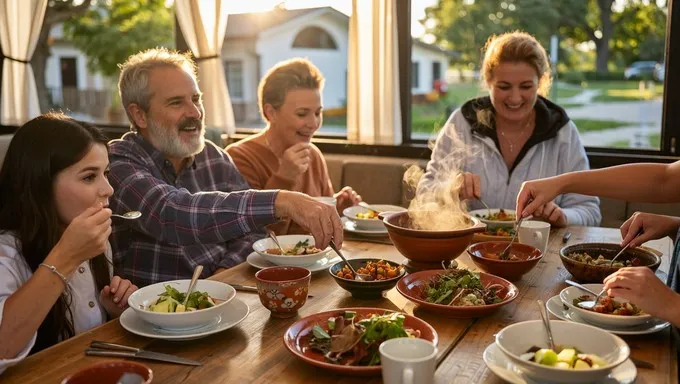
Photograph during activity, not for photography. Bring your camera to dinner. To game night. To the lazy Sunday morning when nobody's dressed up or performing anything. The best shots almost always happen when the camera becomes furniture.
Talk less, shoot more. Long explanations and directions break the naturalness you're trying to capture. Learn to work quietly. Make adjustments to yourself — your position, your angle, your settings — rather than to your subject.
Let them see the images. Not to critique, but to build trust. When the people you love see that you're capturing them with care and honesty, they relax. That relaxation compounds over time.
Include yourself sometimes. Self-timer, second camera, asking someone else to shoot — being in the frame with your loved ones occasionally changes the dynamic. You stop being the observer and become part of the story. That shift is good for everyone.
The Photo That Changes Everything
Every photographer who has pushed through this particular difficulty describes a moment — one image — that made it worth it.
For Lisa, it was finally getting a portrait of her mom laughing, genuinely laughing, at a terrible joke Lisa made to break the tension. "It's the most her I've ever seen her," she said. "I cried when I edited it."
For Darren, it was that phone-lit shot of his son.
For you, it might still be ahead. But it's there, waiting in some ordinary moment you haven't photographed yet because you were afraid of getting it wrong.
Get it wrong a hundred times first. The real one will come.