When You Finally Look: The Quiet Bravery of Facing Old Photos of Yourself
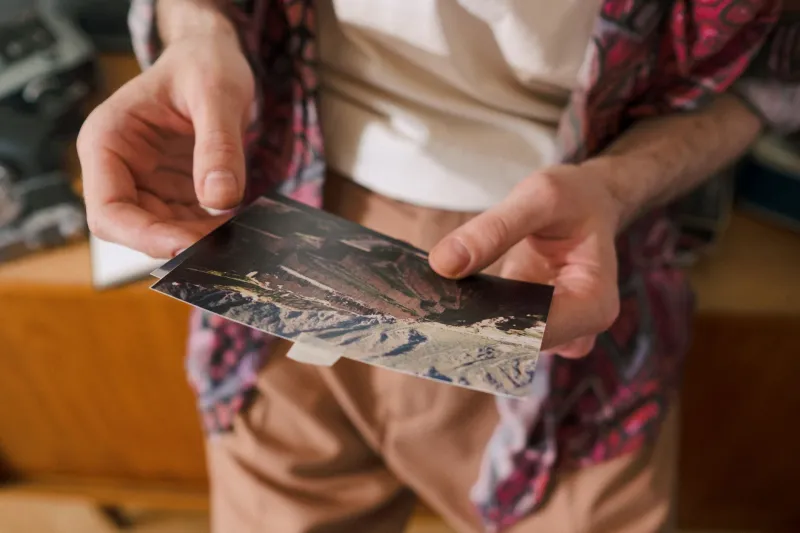
Somewhere on your phone, or buried in a box in the back of a closet, or tucked inside a Facebook album you haven't opened since 2013 — there's a version of you staring back. Maybe it's a candid from a backyard cookout. Maybe it's a formal portrait from a time when everything felt uncertain. Maybe it's a blurry selfie taken during a period you'd rather not revisit.
Most of us scroll past those images fast. We cringe, we close the app, we move on.
But what if sitting with those photos — really sitting with them — was one of the most honest things you could do for yourself?
The Flinch Is the First Clue
There's a reason looking at old photos of yourself feels different from looking at old photos of your kids, your friends, your dog. Other people's images carry nostalgia. Yours carry something heavier: evidence.
They show you who you were before you edited yourself into who you are now. The haircut you thought was bold. The weight you carried — or didn't. The smile that looks forced, or the one that looks more genuine than anything you've managed in years. Old photos don't lie, and that's exactly why they're uncomfortable.
Photographers talk about this a lot. When you spend time behind the lens, you develop a strange relationship with your own image. You become hyper-aware of how a frame can flatten or exaggerate, how light flatters or exposes. And yet, even the most technically skilled photographers often admit they avoid looking at photos of themselves from five, ten, twenty years back.
The flinch isn't vanity. It's vulnerability.
What You're Actually Seeing When You Look Back
Here's the thing most people miss when they flip through an old album: you're not just seeing a younger face. You're seeing a whole belief system.
The way you held yourself in a photo from your mid-twenties reflects what you thought about your own worth at the time. The way you positioned yourself at the edge of a group shot, or leaned into the center, or angled away from the camera entirely — all of it is data. It's a record of your self-perception at a specific moment in time.
And when you look at that image now, with the distance of years, you're getting something genuinely rare: an outside view of an inside feeling you can barely remember.
A lot of people describe this experience as unexpectedly emotional. Not sad, exactly. More like — compassionate. Like meeting someone who needed more grace than they were getting, and finally being in a position to offer it.
That's not nostalgia. That's growth, showing its face.
Why We Avoid It (And What That's Costing Us)
American culture has a complicated relationship with self-reflection. We're encouraged to move forward, level up, keep going. Looking back gets coded as dwelling, as weakness, as something therapists are for — not something you do on a Tuesday afternoon.
But avoidance has a cost. When we refuse to look at who we were, we also refuse to fully acknowledge how far we've come. We stay stuck in a vague, unexamined sense of ourselves that's neither accurate nor kind.
For people who've been through hard seasons — a divorce, a health scare, the loss of a parent, a career that fell apart — old photos can feel like crime scene evidence. Something to be sealed off and not revisited. But therapists and photographers who work at the intersection of image and identity increasingly argue the opposite: that those photos, approached with care, can be part of how we process and integrate what happened to us.
You don't have to make it a big event. You don't need a journal and a candle and three hours. Sometimes it's just pausing on a photo instead of swiping past it. Letting it land.
The Archive as a Mirror
Some photographers have started treating their personal archives the way a writer treats old journals — as raw material for understanding themselves. Not to curate a highlight reel, but to witness the full range of who they've been.
This practice asks you to look at the unflattering photos too. The ones taken when you were exhausted, or grieving, or just having an ordinary Wednesday that didn't feel worth documenting. Those images, it turns out, often carry the most truth.
There's something quietly radical about looking at a photo of yourself from a hard year and saying: I was there. I looked like that. I made it through anyway.
It reframes the archive. Instead of a collection of your best moments, it becomes a record of your persistence.
Giving Yourself the Same Eye You Give Everyone Else
If you're a photographer — hobbyist, professional, or just someone who shoots on their phone — you already know how to look at a subject with generosity. You know how to find the light in a face, the story in a gesture, the dignity in an unguarded moment.
The harder practice is turning that same eye on yourself.
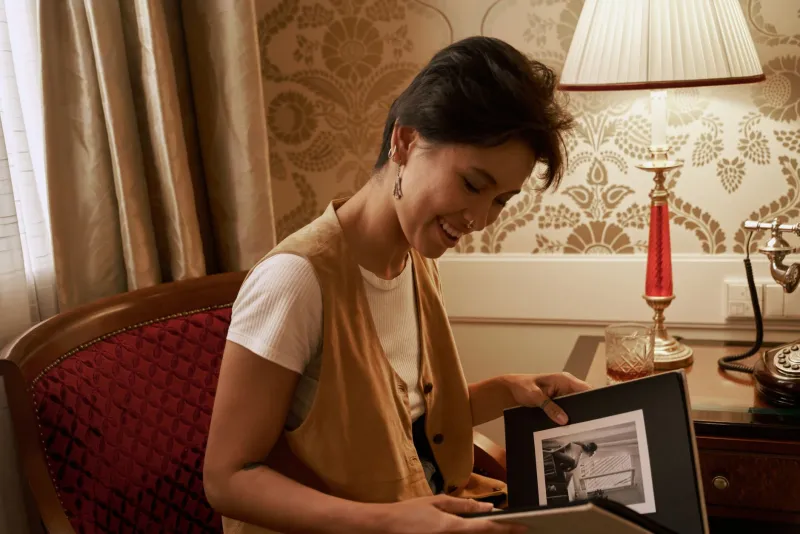
Look at a photo of yourself from ten years ago the way you'd look at a portrait of someone you love. What do you notice? What does that person seem to be carrying? What are they hoping for? What would you want to tell them?
Chances are, you wouldn't lead with the criticism. You'd lead with care.
That's the whole point.
The Courage Part
Looking back at old photos of yourself is an act of courage because it requires you to hold two truths at once: that you were imperfect then, and that you were worthy anyway. That you've changed, and that the person you were deserves to be acknowledged — not erased.
It's easy to live forward without ever reconciling with who you used to be. A lot of people do it. But there's something that gets left behind when you do — a kind of wholeness that only comes from being willing to witness your own story, all the way through.
The photos are already there. They've been waiting.
When you're ready, so are they.