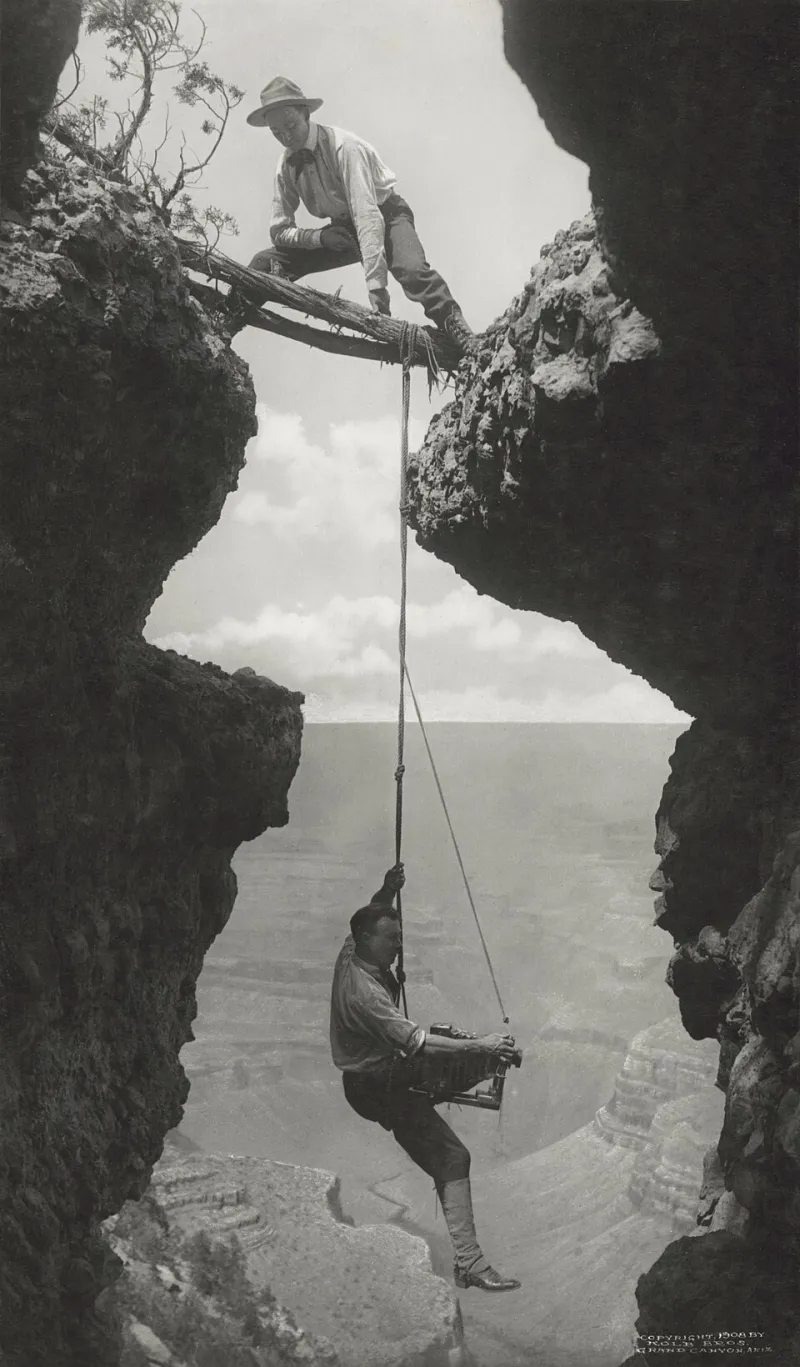
Your Brain Edited That Memory — But the Photo Didn't
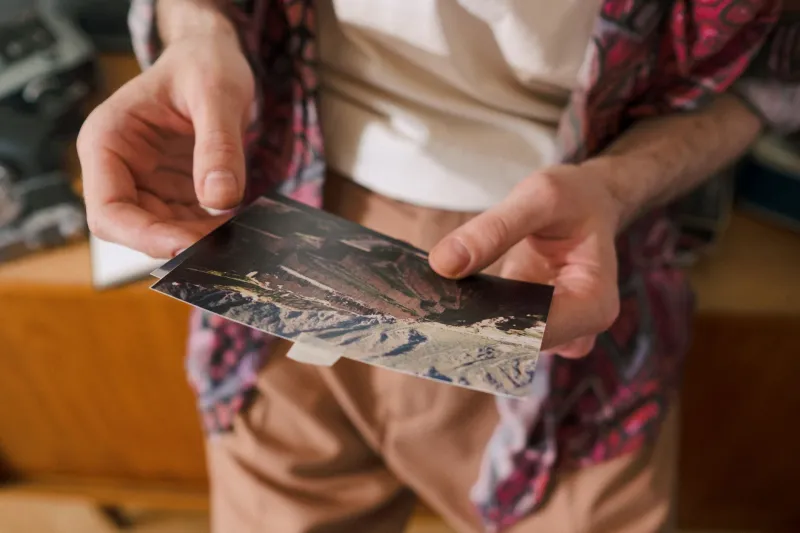
There's a photo from Marissa Tran's wedding that she genuinely did not recognize at first glance. Not because it was blurry or poorly composed — it was perfectly sharp. The problem was that the expression on her face was nothing like the one she'd been carrying around in her head for eight years.
"I remembered feeling so calm and radiant," she says, laughing a little. "The photo shows me looking completely overwhelmed, eyes a little red, holding my bouquet like I'm trying to crush it. And honestly? That version is way more true to how that day actually felt."
Marissa's experience isn't unusual. It might actually be the rule.
Memory Is a Storyteller, Not a Recorder
Here's something neuroscience has been quietly confirming for decades: your memory is not a filing cabinet. It's more like a novelist with strong opinions.
Every time you recall a moment, your brain reconstructs it — pulling from fragments, filling in gaps with what feels emotionally right, and subtly reshaping the details to match your current mood, identity, or the story you most need to believe about yourself. Psychologists call this "memory reconsolidation," and it happens whether you're aware of it or not.
Dr. Julia Howe, a cognitive neuroscientist based in Chicago who studies autobiographical memory, puts it plainly: "Each retrieval is also a re-encoding. You're not playing back a video. You're rebuilding the scene from scratch, and every rebuild introduces small changes. Over years, those changes compound."
Photographs, on the other hand, don't reconstruct anything. They just sit there, holding the original frame.
That tension — between the photo's fixed truth and memory's fluid one — is where things get interesting.
The Gap Between What You Remember and What Was Real
When documentary photographer Leon Graves started shooting long-term family projects, he noticed something that quietly changed how he thought about his own work.
"I'd photograph a family over three or four years," he says. "Then I'd sit down with them to review the archive. Almost every time, someone would point at a photo and say, 'I don't remember it being like that.' And I'd say — I was there. That's exactly how it was."
The discrepancies weren't always dramatic. Sometimes it was something small: a parent remembering a birthday party as pure joy, while the photo showed a child crying in the corner of the frame. Sometimes it was bigger — whole relationships that had been mentally recast after falling apart, the warmth in old photos now looking like evidence nobody wanted to see.
"Photos are uncomfortable that way," Leon says. "They don't update themselves to match how the story ended."
For some people, that discomfort is the point.
When the Photo Tells You Something You Needed to Hear
Kevin Adler, a high school teacher in Portland, Oregon, spent years describing his childhood as a happy one. He believed it. It felt true.
Then his mother passed away, and he spent a weekend going through boxes of old prints — the kind developed at drugstores, with the date stamped on the back in faded orange ink.
"There were photos from what I'd always called 'the good years,'" he says. "And I looked at them, and I just... I looked so tense. Like, every picture. My shoulders were up near my ears. I wasn't smiling in a relaxed way. I was performing."
The photos didn't tell Kevin his childhood was bad. But they gave him permission to hold a more complicated truth — one his memory had smoothed over in the interest of getting through the years.
"It was actually a relief," he says. "Like, oh. So I wasn't imagining things. The camera saw it too."
Dr. Howe notes that this kind of revelation is more common than people expect. "We tend to remember our past selves in ways that protect our current self-concept. If you've built an identity around being resilient and unbothered, your memory will quietly edit out the moments that contradict that. A photo can't do that for you."
The Liberation in Being Caught Honestly
There's a reason so many people, when they finally look at an old photo with fresh eyes, describe the experience as freeing rather than just jarring.
Authenticity has weight. When a photograph captures something your memory buried — the exhaustion behind the smile, the love you'd forgotten you felt, the fear you'd rewritten as confidence — it hands you back a piece of yourself you didn't know you'd lost.
This is part of what drives the work at spaces like Simply Be Photo. The whole philosophy is built around the idea that the most valuable image isn't the most flattering one. It's the most honest one. The one that still holds up twenty years later, not because it made you look good, but because it made you look real.
Marissa keeps that wedding photo on her fridge now. The one where she looks overwhelmed, bouquet gripped too tight.
"My husband and I look at it sometimes and just laugh," she says. "Because that's actually us. That's actually that day. The pretty posed ones are nice, but they could be anybody. That one? That one is ours."
What to Do With the Photos You Almost Deleted
If any of this resonates, here's a simple invitation: go back through your archive with a different question than the one you usually ask.
Instead of do I look good here, try is this true.
You might be surprised how often the answer to the second question is yes, even when the answer to the first one is no. The slightly blurry one from the camping trip. The candid from Thanksgiving where everyone looks tired but somehow still gathered. The photo you almost deleted because your expression was "weird."
Your brain has been editing your past for years. The photos haven't. That's not a flaw in the photograph — it's the whole point of taking one.