The Images We Never Post: How Photographers Carry Loss Through Their Work
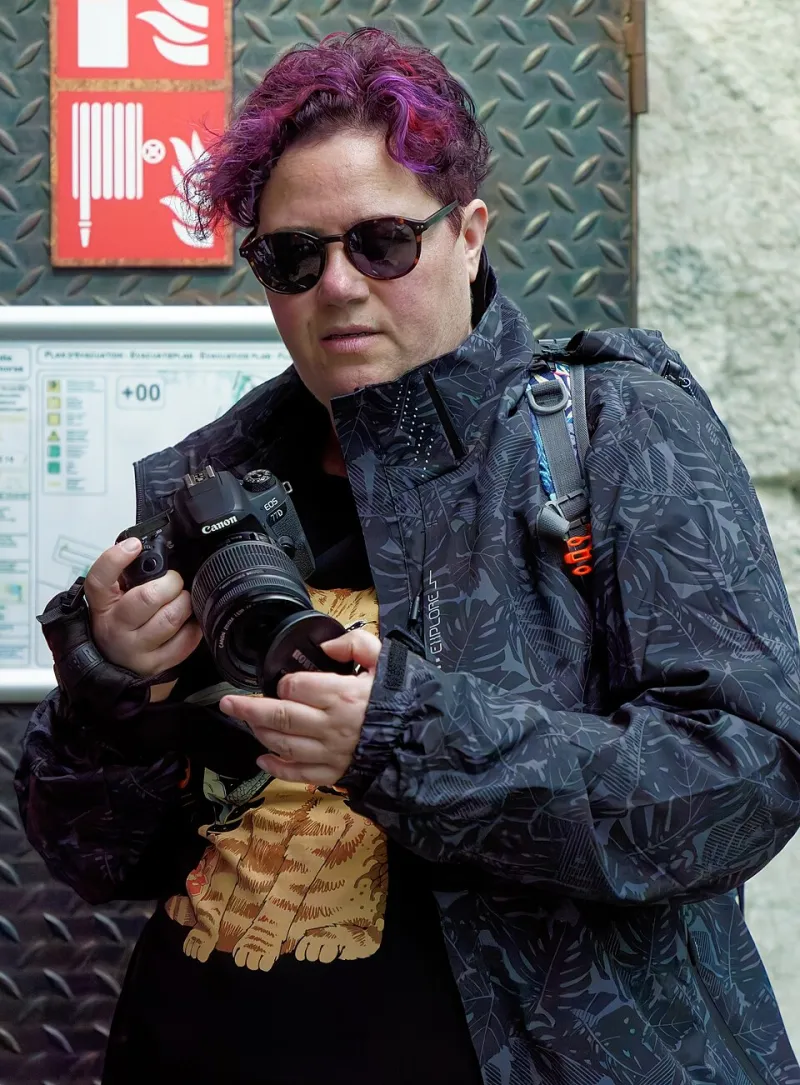
Photo: Miguel Discart & Kiri Karma, CC BY-SA 4.0, via Wikimedia Commons
There's a folder on Marcus Webb's hard drive he hasn't opened in two years. It sits there, labeled with a date in February, nested inside a directory he never backs up to the cloud. He knows what's in it. He doesn't need to look.
"I took maybe four hundred frames the week my dad died," he says. "I wasn't photographing anything, really. I was just walking around our old neighborhood in Cincinnati with my camera because I didn't know what else to do with my hands."
He never posted a single one.
For photographers, the camera is often described as a way of seeing—a tool for sharpening attention, for finding meaning in the ordinary. But there's a less-discussed function it serves, one that rarely makes it into the portfolio or the Instagram grid: the camera as a container for things too heavy to carry any other way.
The Documentary Impulse Meets the Private Heart
Photography has always had a complicated relationship with grief. Think of the long tradition of post-mortem portraiture in 19th-century America, where families commissioned images of the recently deceased as a way of preserving what was already gone. Or the documentary photographers who've embedded themselves in war zones and disaster areas, wrestling constantly with the ethics of pointing a lens at suffering.
But those frameworks assume an audience. They assume the image will eventually be seen, interpreted, given context.
What happens when the photographer has no intention of sharing at all?
Tanya Okafor, a portrait photographer based in Atlanta, went through a divorce in her late thirties that she describes as "the quietest earthquake I've ever survived." During the eighteen months of legal proceedings and emotional fallout, she kept shooting—but not the kind of work she'd built her business on. She was making pictures of her apartment. The half-empty closet. A single coffee mug. The particular quality of afternoon light through a window she'd soon stop waking up to.
"I wasn't trying to make art," she says. "I wasn't trying to document my divorce for posterity. I was just trying to prove to myself that the world was still there, that it still had shape and light and edges."
She has never shown those images to anyone.
When Shooting Becomes Surviving
There's a psychological concept sometimes called "active coping"—the idea that doing something, almost anything purposeful, can interrupt the paralysis that grief produces. For photographers, picking up the camera can serve that function in a way that's hard to replicate with other creative practices.
Writing requires language, and language requires a kind of coherence that loss often destroys. Painting and drawing demand a deliberate mark-making that can feel impossibly slow when you're moving through shock. But the camera is fast. It responds to instinct. It lets you act before you think.
"I think I photographed my way through my mother's illness because it gave me something to do in the room," says David Lim, a documentary photographer from Portland. "I wasn't just sitting there watching her sleep. I was working. Or at least I was doing something that looked like working."
He pauses. "Most of those pictures are technically terrible. The light is wrong, the compositions are off. But I couldn't tell you what I would have done without a camera in my hands during those months."
He has shared a few of the images—carefully selected, stripped of identifying detail—at a small local exhibition about caregiving. But the majority remain private, filed away not as art but as evidence. Proof that he was present.
The Danger of Turning Pain Into Content
It would be easy, in the current media landscape, to talk about photographing grief as a kind of creative practice to be optimized and eventually shared. There's a whole genre of it on social media: the raw, vulnerable post with the carefully chosen black-and-white image and the caption about healing. It performs authenticity while packaging it for consumption.
The photographers who spoke for this piece were unanimous in their discomfort with that impulse.
"The second you think about how it's going to look to someone else, you've lost something," Okafor says. "You've turned a private experience into a public one before you've even had time to understand what it is."
This is the central tension for photographers who use their work to process difficult emotions: the same instinct that drives them to document also threatens to aestheticize, to package, to perform. The camera is a frame, and frames impose a kind of order on things that grief actively resists.
Lim puts it plainly: "Grief isn't a story. It's not linear, it doesn't have an arc, it doesn't resolve. The minute you try to make images that tell a story about grief, you're lying a little."
What the Unseen Images Hold
Displacement—the particular grief of leaving a place you loved, or being forced out of one—produces its own photographic instinct. Ask anyone who's moved away from a hometown, or lost a home to foreclosure or disaster, and many will tell you they reached for a camera.
Sometimes those images are straightforward documentation: the empty rooms, the packed boxes, the last look at a backyard. But sometimes they're stranger than that. Oblique. A detail that would mean nothing to anyone who wasn't there.
"I took a picture of a crack in my kitchen wall the day before I moved out of the house I'd lived in for eleven years," says one photographer who asked not to be named. "Just a crack in the plaster, maybe six inches long, shaped a little like a river on a map. I'd been looking at that crack for a decade. It was mine."
That image sits in a folder she's never organized, never titled, never shared.
"I don't know why I took it," she says. "I just knew I had to."
Maybe that's the truest thing that can be said about this kind of photography: it doesn't need a reason. It doesn't need an audience. It doesn't need to be good. It just needs to happen, at the moment when the only way to be present in an unbearable situation is to look at it very carefully through a small rectangle of glass.
The folder stays closed. The images stay private. And somehow, that's exactly where they belong.