Less Frame, More Truth: The Quiet Power of Leaving Things Out
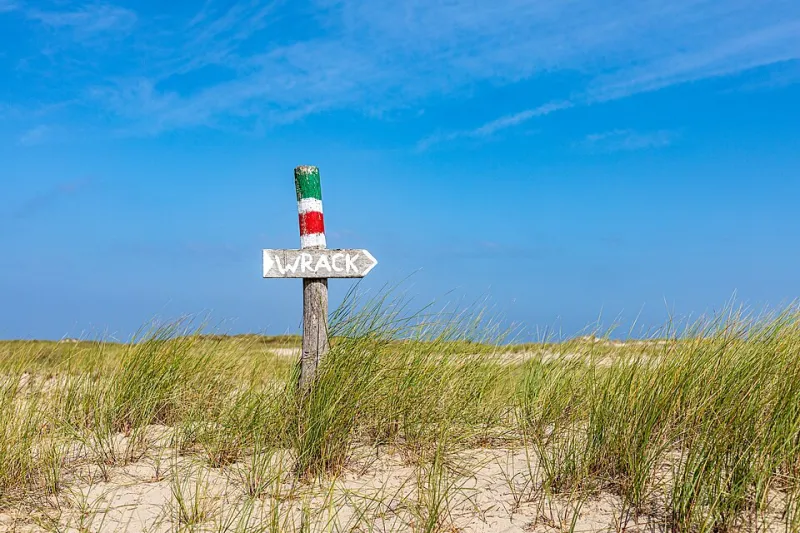
Photo: Dietmar Rabich, CC BY-SA 4.0, via Wikimedia Commons
Scroll through any major photography account right now and you'll notice a pattern. Every corner of the frame is occupied. Every shadow holds a detail. Every composition is dense with information, as if the photographer was terrified of leaving anything unresolved, anything ambiguous, anything that might let the viewer's eye wander off into nothing.
It's exhausting. And it's lying to you.
Not intentionally, maybe. But the assumption buried inside maximalist photography—that more detail equals more truth, that a fuller frame tells a fuller story—is one of the most persistent myths in contemporary visual culture. And it's worth pushing back on.
What Empty Space Actually Does
Negative space isn't a stylistic choice you make when you run out of things to photograph. It's a compositional decision with real emotional consequences.
When you leave a significant portion of a frame empty—a wide stretch of gray sky above a single figure, an expanse of flat desert road with nothing on the horizon—you're not withholding information. You're redirecting attention. You're forcing the viewer to sit with what's actually there instead of giving them the relief of distraction.
Think about the difference between a portrait that fills the frame edge to edge with a person's face, every pore and texture rendered in high resolution, versus a portrait where the subject occupies maybe a third of the image and the rest is a plain, uncluttered background. The first image tells you what someone looks like. The second one makes you wonder who they are.
That wondering is where storytelling lives.
The American Appetite for More
There's a cultural context here that's worth naming. American visual culture has, for a long time, operated on the assumption that abundance signals quality. Bigger portions. More channels. Longer trailers that basically show you the whole movie. The logic extends to photography: if one interesting element is good, five is better.
Social media accelerated this. Platforms optimized for engagement figured out quickly that busy, colorful, information-dense images stopped the scroll more reliably than quiet ones. So the algorithm rewarded maximalism, and photographers—consciously or not—learned to fill frames the way a grocery store fills shelves: to capacity, with no visible gaps.
The result is a visual landscape where subtlety reads as incompleteness. Where a photograph with a lot of empty space looks, to an eye trained on Instagram, like the photographer didn't finish the job.
That's a strange place to have arrived at, if you think about some of the most enduring American photographs ever made. Dorothea Lange's "Migrant Mother" is not a busy image. The background is soft and undifferentiated. The children's faces are turned away. What's absent in the frame—context, resolution, comfort—is as important as what's present.
Restraint in Portraiture
For portrait photographers, the temptation to fill the frame is especially strong. You have a person in front of you, and that person has a face full of detail and a story you want to communicate. The instinct is to get close, to capture everything, to leave nothing to interpretation.
But restraint in portraiture can do something that comprehensive documentation can't: it can suggest interiority.
A subject photographed against a plain white wall with a lot of space above their head looks isolated. Maybe lonely. Maybe contemplative. The emptiness above them becomes part of their psychological state, even though it's technically just a wall. You're not being told how to feel about this person. You're being given room to form your own response.
Conversely, a portrait that fills every inch of the frame with environmental detail—the bookshelf, the family photos, the carefully chosen decorative objects—can tell you a lot about a person's life while telling you almost nothing about who they actually are. You're reading props instead of presence.
Landscape and the Geometry of Nothing
Landscape photography has a longer tradition of embracing negative space, maybe because the natural world doesn't always cooperate with the desire for a full frame. A salt flat in Utah is not going to give you a lot to work with in the foreground. Neither is a fog-covered bay at dawn, or a winter field in the Midwest where the sky is the same muted gray as the frozen ground.
But photographers who lean into that emptiness rather than fighting it often end up with images that feel genuinely large—not in terms of spectacle, but in terms of emotional scale. There's something about a landscape where you can see a very long way and there's almost nothing to see that produces a specific kind of quiet in the viewer. A held breath. A sense of the world as vaster and less manageable than you'd like it to be.
That feeling is honest. It's not manufactured by adding drama or layering in visual complexity. It comes from having the discipline to leave the frame alone.
Everyday Scenes and the Art of Knowing When to Stop
You don't have to be shooting vast Western landscapes or stark minimalist portraits to practice this kind of restraint. It applies to the most ordinary subjects—a cup of coffee on a table, a child's shoes by the front door, a street corner at dusk.
The question isn't whether the scene has enough in it. The question is whether what's already there can carry the weight of the image on its own, or whether you're filling the rest of the frame out of habit, or anxiety, or the fear that the viewer won't get it.
That fear is worth examining. Because often the viewer doesn't need to get it, at least not in the explicit, nothing-left-to-interpret way that maximalist photography assumes. Often what the viewer needs is a little room to bring themselves to the image—their own memories, their own associations, their own sense of what the empty space might mean.
Subtlety, in this media moment, really has become something close to a radical act. Not because it's difficult or rare, but because it asks something of the audience that the current visual ecosystem has trained people not to expect: patience, participation, and the willingness to sit with something unresolved.
The most honest photograph you can make might be the one where you stopped before you thought you were done.